Myanmar: Six months after the earthquake, access to clean water remains a lifeline for hard-hit communities
Six months after a devastating 7.7 magnitude earthquake struck Myanmar, access to safe water remains one of the most urgent and persistent challenges for affected communities.
The disaster is estimated to have left around 4.3 million people in need of clean water and sanitation assistance across the Southeast Asian country, forcing many to resort to unsafe sources for their daily needs. In Sagaing Region, one of the most severely affected areas, only 20% of the population had access to safe drinking water.
“Since all the water tanks were broken, we had to rely on the lake and drink water from it,” says U Nyein Maung, a resident of Nyaung Pin Thar Village in Mandalay region. “Some areas had enough, others had nothing, there just wasn’t enough water for everyone.”
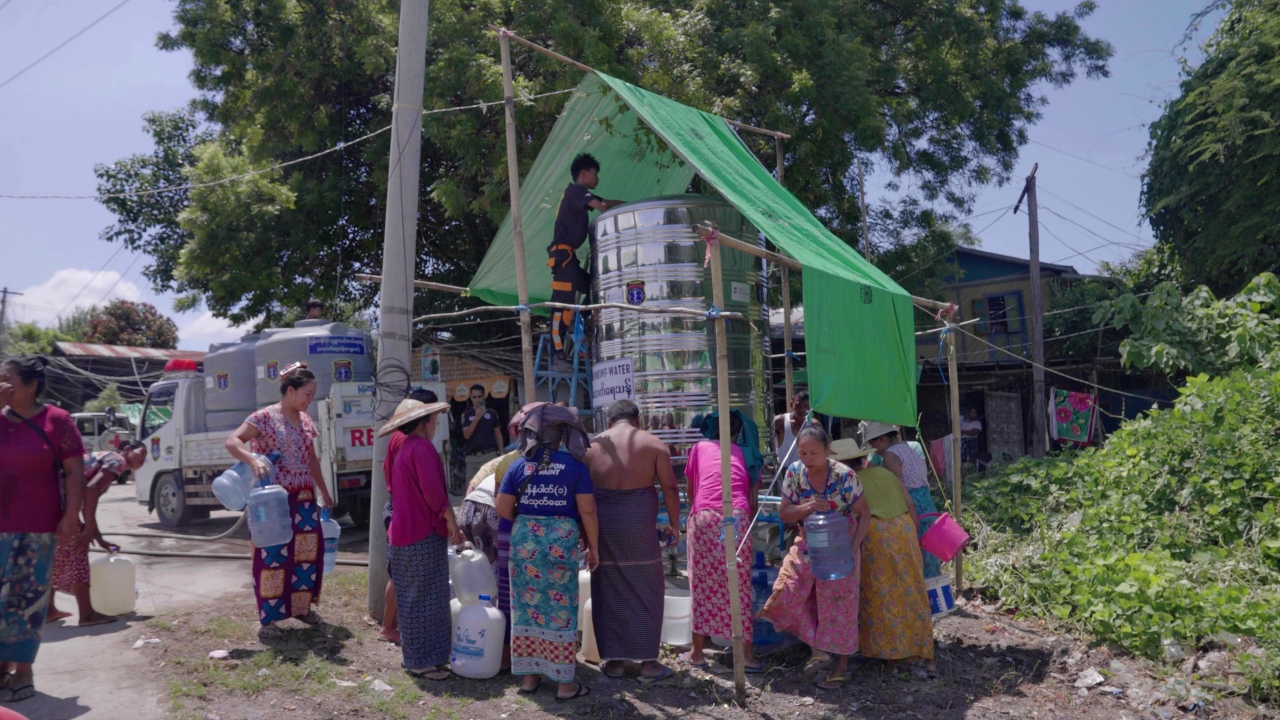
From monasteries turned into temporary shelters to overcrowded displacement sites, daily life continues to be challenging with limited access to basic services. In hard-hit and hard-to-reach areas, such as Amarapura Township and Nyaung Pin Thar Village in the Mandalay Region, the International Committee of the Red Cross (ICRC) has supported emergency water operations to ensure access to safe drinking water, providing a vital source of relief for communities with no stable water supply.
In the weeks following the disaster, in close coordination with the Myanmar Red Cross Society (MRCS) and other local partners, the ICRC worked to restore access to safe water through both emergency interventions and longer-term repairs.
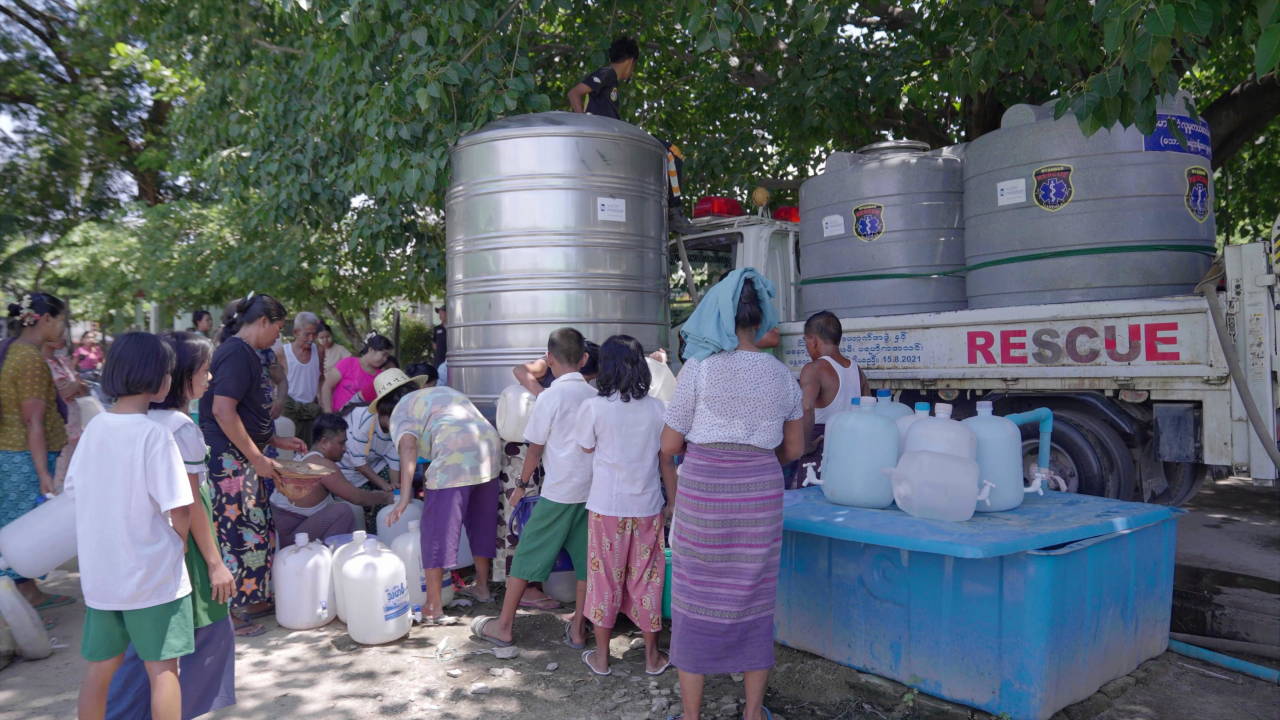
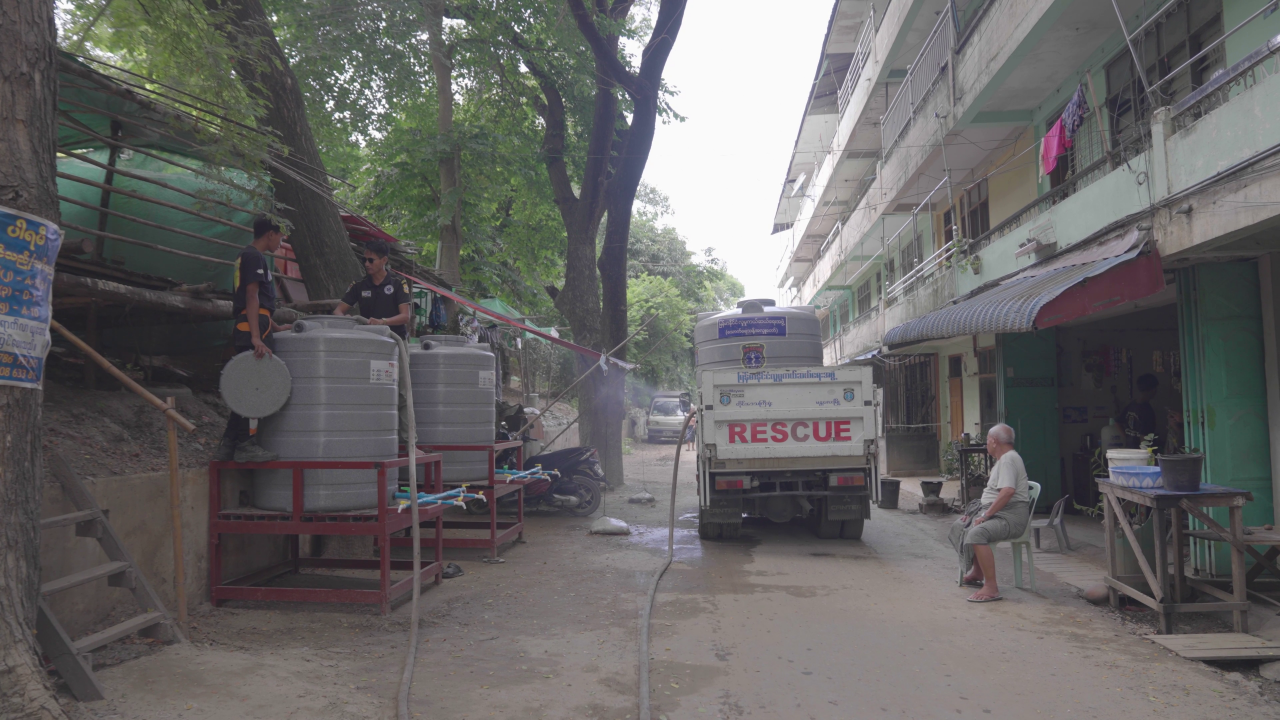
Water trucking, donation of water tanks, borehole rehabilitation and distribution of hygiene kits were carried out in remote areas, many of which were difficult to access due to damaged infrastructure or security constraints.
“People with money can afford to buy water, but those of us who don’t have money can’t,” said Ma Sain Sain Myat from Amarapura Township. “We have to wait for the water truck. If we manage to fill four, five or six buckets, that’s just enough to last us until the next delivery. We’re drinking the clean water being provided, and it makes a real difference.”
Since March, the ICRC has supported more than 81,000 people with access to safe water, working closely with local organisations, the MRCS and community volunteers. These efforts have ensured that some of the most vulnerable households maintain a sense of stability and dignity by ensuring access to one of life’s most essential resources, despite the ongoing disruptions.
“Water systems in many affected townships were either destroyed or heavily damaged,” said Ei Shwe Zin Myo, an ICRC water and habitat engineer in Mandalay. “Our priority has been to deliver emergency relief, but also to begin restoring sustainable access to clean water. Communities should not have to rely indefinitely on water trucks.”
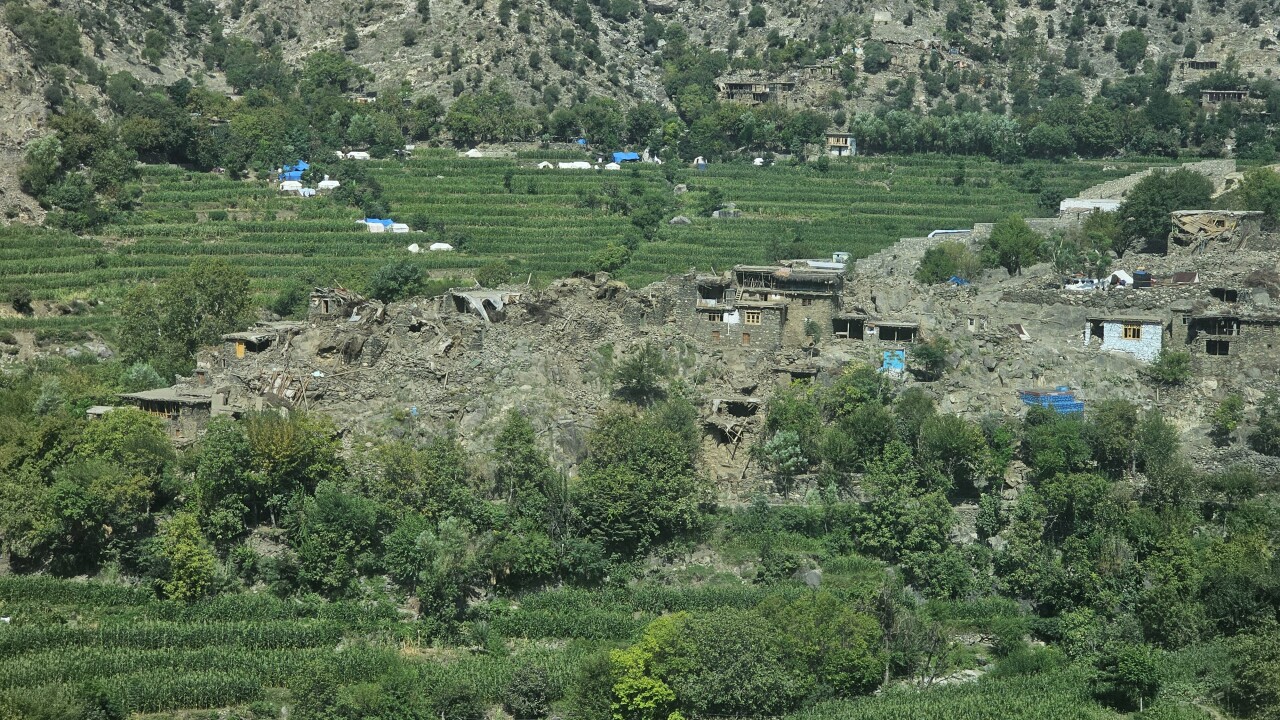
Since the 28 March earthquake, the last reports indicate that at least 3,817 people were killed and 5,104 were injured across the most severely affected regions. An estimated 29,000 homes were either destroyed or severely damaged in Mandalay Region alone.
In response, nearly 186,000 people across Myanmar have received humanitarian assistance from the ICRC over the past six months. This support has included access to clean drinking water and shelter, food and essential household items, multipurpose cash grants and livelihood assistance.
While these efforts have been essential, humanitarian needs remain high. Many communities still rely on temporary solutions and face ongoing challenges accessing essential services. The ICRC continues to support long-term infrastructure repair, improve sanitation and ensure sustainable access to safe water as part of a broader recovery effort. Continued access and international support remain critical to help families rebuild their lives with dignity.
ICRC in Myanmar
The ICRC has been active in Myanmar for 40 years, providing assistance to people affected by armed conflict and other situations of violence. The ICRC is active in Kachin, Shan, and Rakhine States, as well as in the central and southern parts of the country. Myanmar is the ICRC’s second largest operation in Asia.
For more information, please contact:
Francisco Javier Pavon Molina, ICRC Yangon, email: fpavonmolina@icrc.org
Aye Myat Thu, ICRC Yangon, tel:+959 786709654, email: amyatthu@icrc.org
or visit our website: www.icrc.org
Follow the ICRC on facebook.com/icrc and twitter.com/icrc
www.icrcvideonewsroom.org. Follow the ICRC on facebook.com/icrc and twitter.com/icrc
Locations: Mandalay, Myanmar
Length: 05:57
Filming dates: 25-08-2025 and 27-08-2025
Language: Burmese
Camera: 10A Production
Producer: Francisco Pavon/Sandy Ye Aung/ICRC
Editor: 10A Production
Copyright: ICRC access all
On Screen Credit: ICRC written or logo
00:00 ~ 00:17 Daw Tote, a community member in Amarapura, speaks to the camera (in Burmese):
“Water is not clean. My niece has a water tank, but their water contains sediment, so I’m afraid of getting sick. That's why I have to rush to collect the water that's provided here. There are water sellers in the village, but it costs 1,200 MMK (0.60 USD) per bucket, and we can’t afford it.”
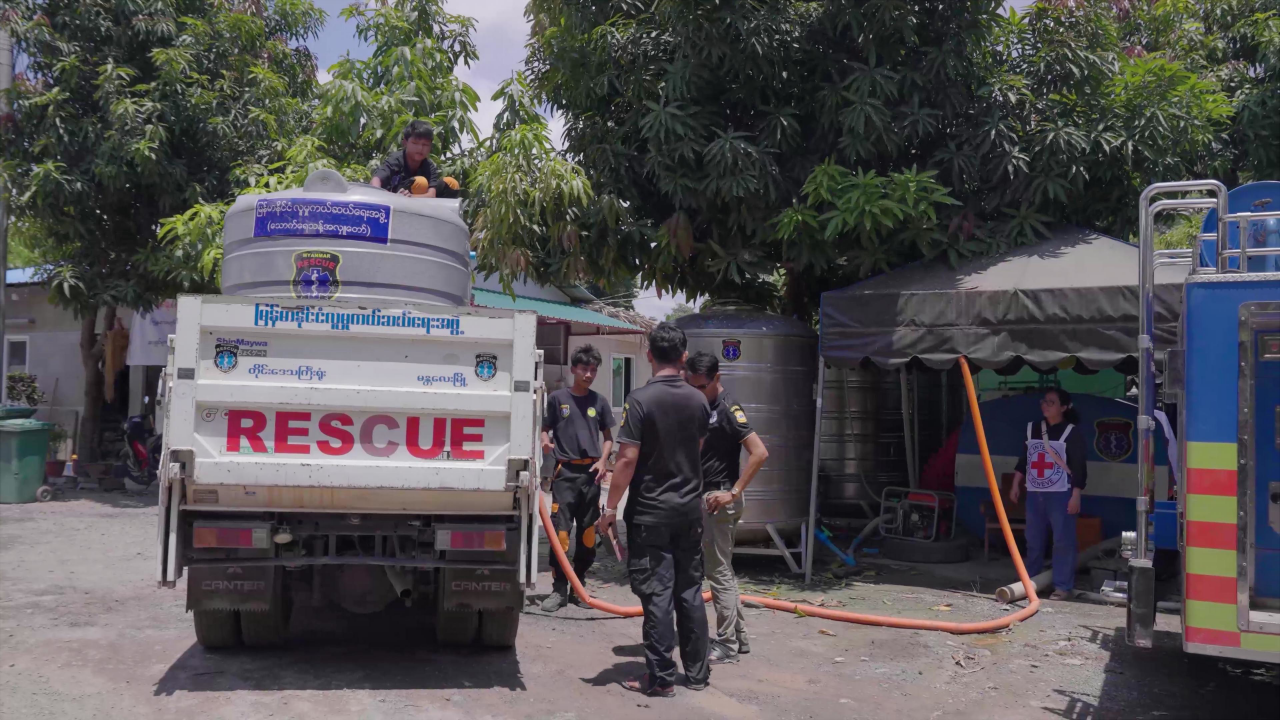
00:18 ~ 00:28 Myanmar Rescue Team members, who are Local partners of ICRC in Mandalay, are filling a water tank to distribute water to communities affected.
00:29 ~ 00:36 Vehicles for water distribution are en route to water distribution points located in villages throughout Amarapura Township, Mandalay region.
00:37 ~ 00:40 Ma Aye Khine, a community member in Amarapura, speaks to the camera (in Burmese): “Because all the water tanks were broken, we are facing difficulties. This water delivery has been a big help for our difficulties”.
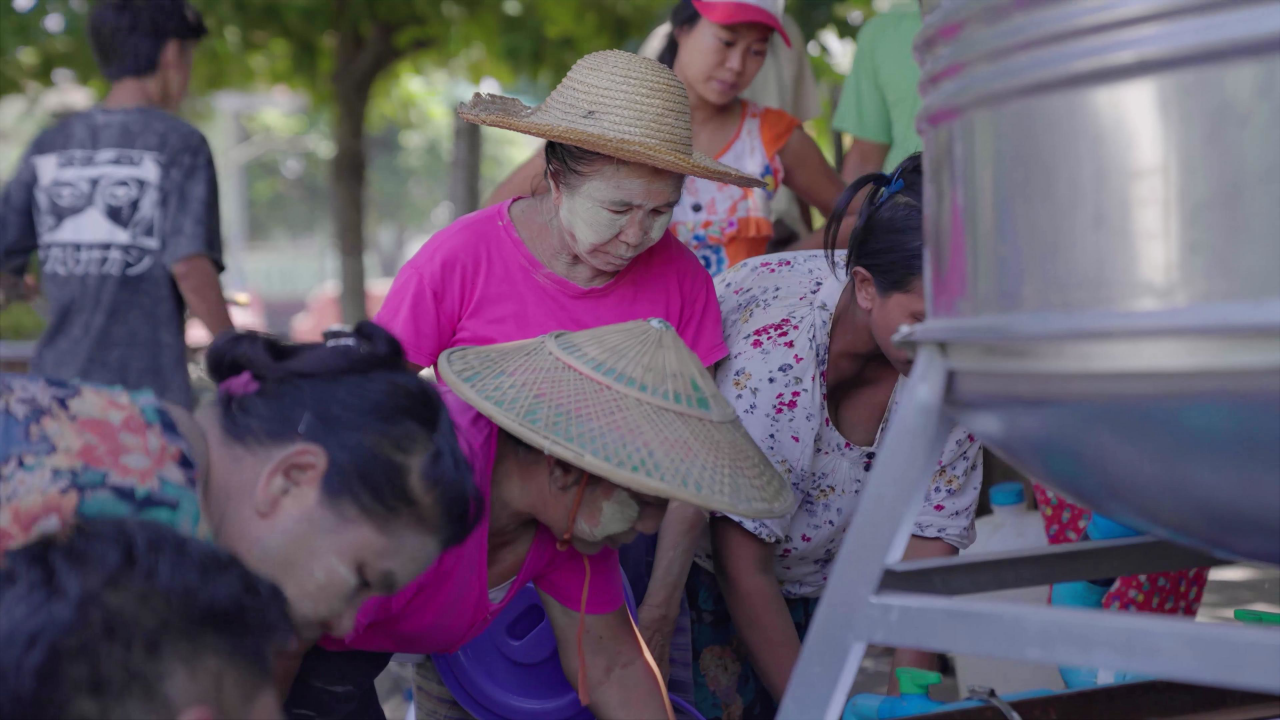
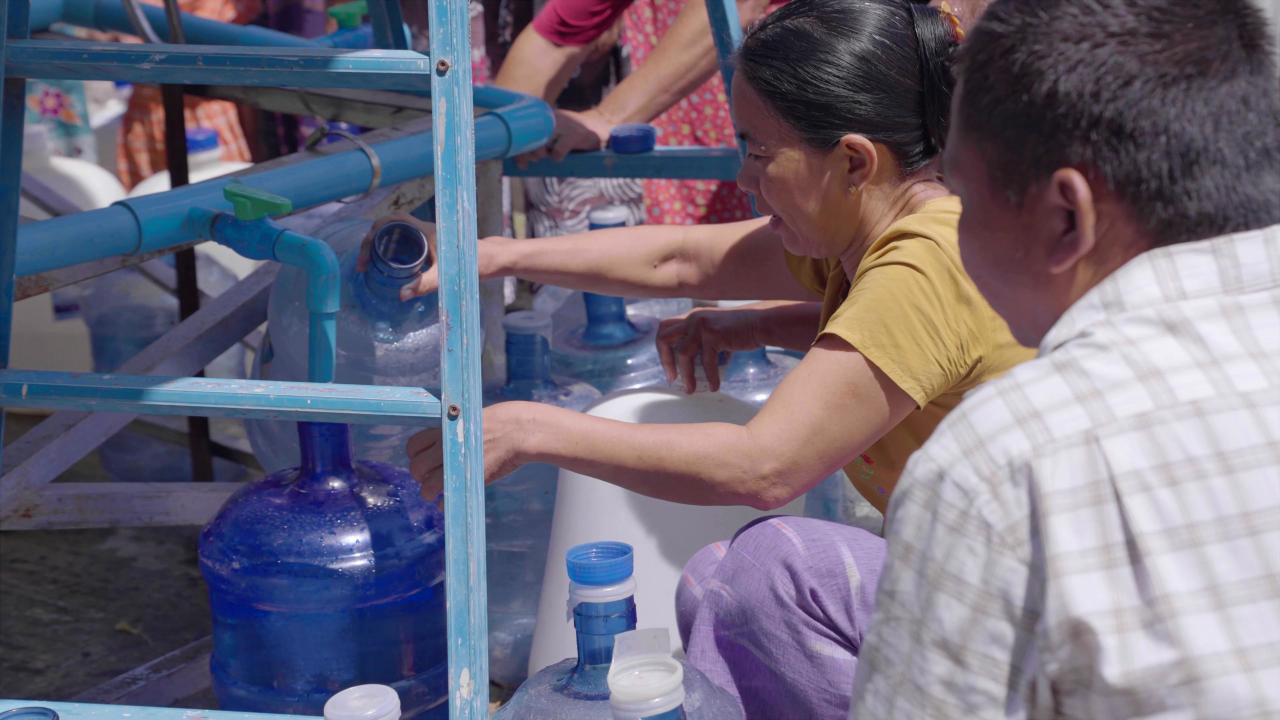
00:41 ~ 00:51 Villagers from Amarapura township are collecting clean water in a distribution point supported by ICRC.
00:52 ~ 01:03 Ma Sein Sein Myat, a community member in Amarapura, speaks to the camera (in Burmese):
“Those who can afford it can buy water. Those who can’t have to wait for the delivery. If we can store 4 to 6 buckets, it will last until the next truck comes.”
01:04 ~ 01:07 Myanmar Rescue Team members are transferring water from the tank on their vehicle to the water tanks at the distribution points.
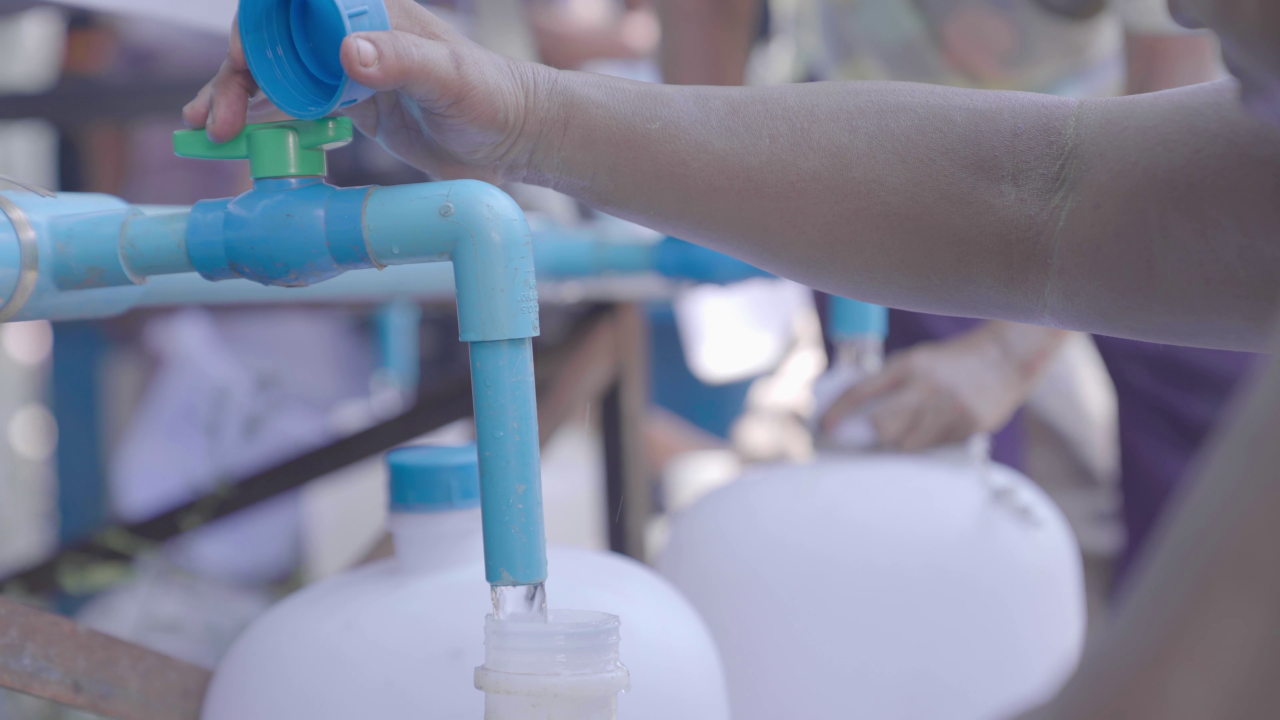
01:08 ~ 01:18 Communities are collecting clean water.
01:19 ~ 01:31 After collecting clean water, community members return to their homes.
01:32 ~ 01:38 Water distribution vehicles are entering the distribution points, which were damaged by the earthquake.
01:39 ~ 01:44 Myanmar Rescue Team members are transferring water from the tank on their vehicle to the tanks at the water distribution points.
01:45 ~ 01:49 Footage of The Mandalay Office of the Myanmar Rescue Organization.
01:50 ~ 02:02 U Yan Lay, Secretary from The Mandalay Office of the Myanmar Rescue Organization, speaks to the camera (in Burmese):
“The ICRC provided water purification equipment, clean water, and operational support for the water trucks. Additionally, a significant amount of rescue-related products has also been provided.”
02:03 ~ 02:11 ICRC staff members are explaining the ICRC-provided water distribution products to members of the Myanmar Rescue Team (in Burmese):
"Are you providing training to us?"
"Yes, we will. We will explain the details during the training session. We can schedule a time and location that works for both of us."
02:12 ~ 02:18 Footage of Water distribution products provided by the ICRC to the Myanmar Rescue Organization, Mandalay Office.
02:19 ~ 02:58 Ma Kyawt Sandar Win - ICRC Staff Member of the Mandalay ICRC Office, speaks to the camera (in Burmese):
“After the 28 March earthquake, the ICRC and Myanmar Rescue launched a project to distribute safe drinking water in Amarapura and parts of Mandalay where people were facing water shortages. We are trying our best to distribute enough drinking water to the people affected by the natural disaster. However, the need for drinking water is increasing, so there is a slight gap between what we can distribute and what is needed.”
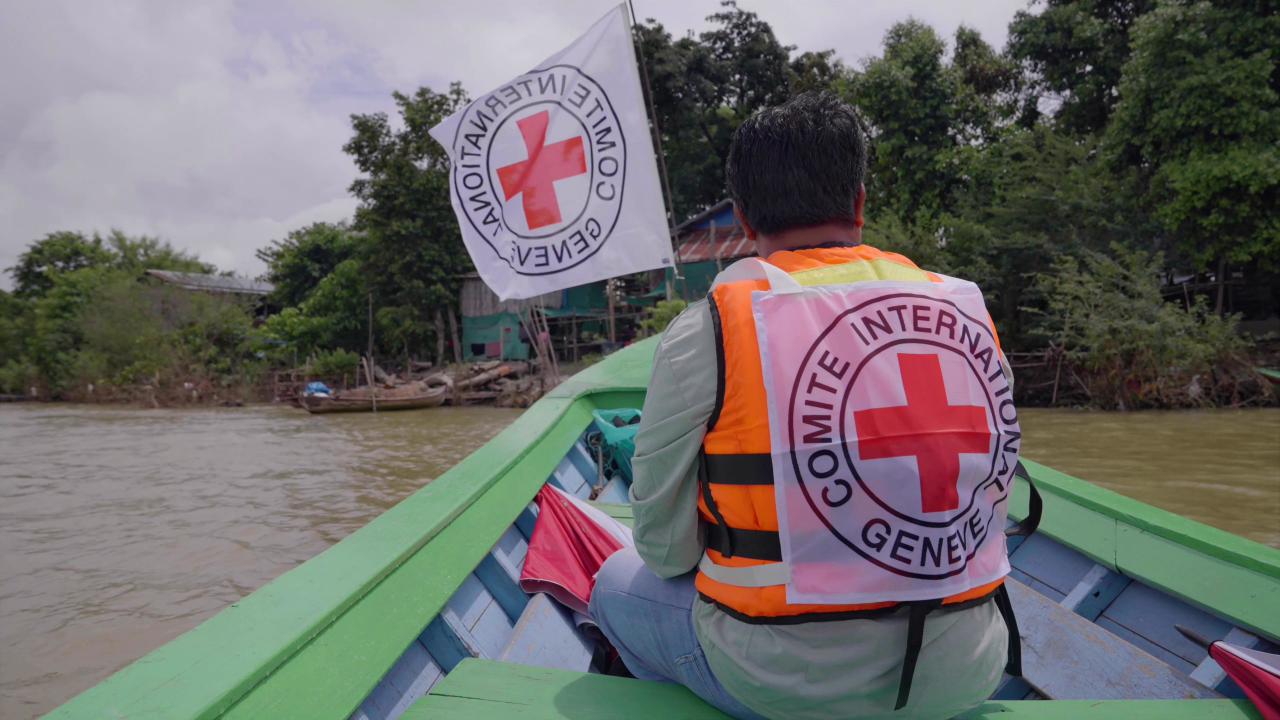
02:59 ~ 03:05 ICRC staff members are going on a field trip to Nyaung Pin Thar Village, Mandalay.
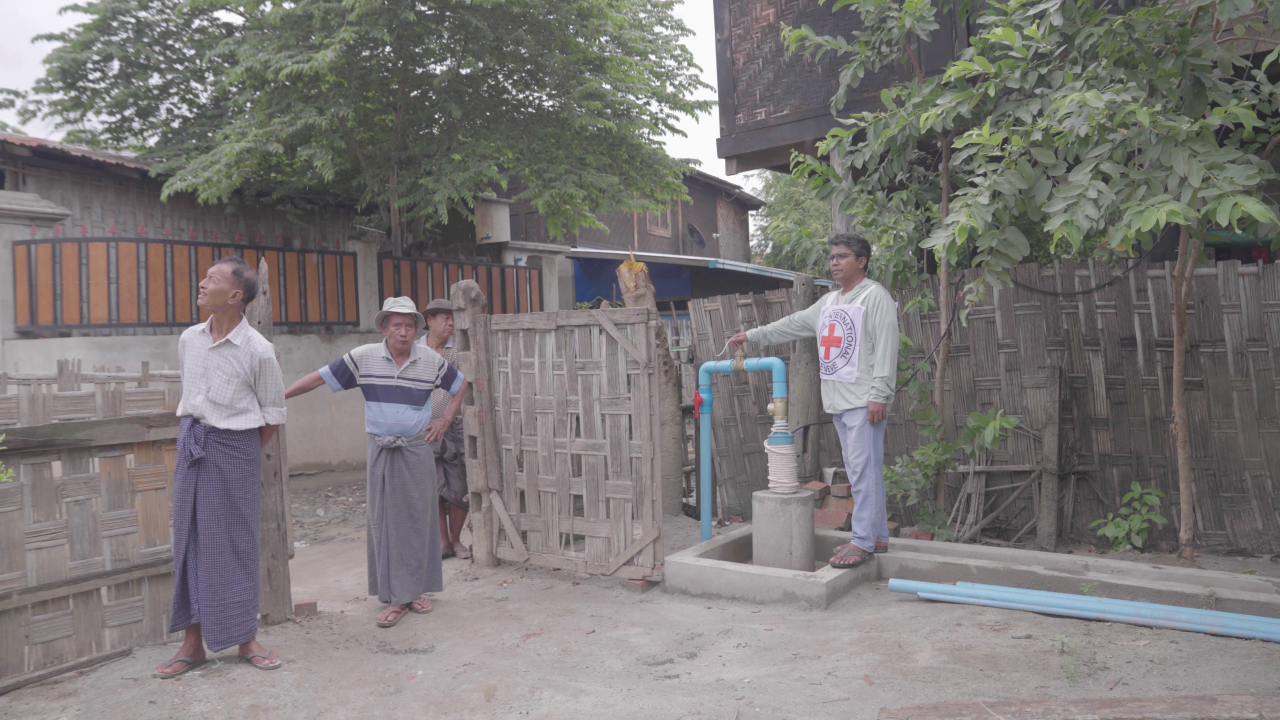
03:06 ~ 03:08 ICRC staff member checking the generator and speaking with community members about the borehole project (in Burmese). “This is just joined to the motor.”
03:08 ~ 03:12 Footage of Clean water is coming out .
03:13 ~ 03:40 U Nyein Maung, Village Head of Nyaung Pin Thar Village, speaks to the camera:
“In the past, we simply collected water from the Irrawaddy River, poured it into pots, and drank it without any treatment because we didn’t know better. Sand and sediment would settle at the bottom of the pots. We've been drinking like that since we were young. Now, we have improved, and we get to drink clean water, so our health isn't harmed.
Now that the water project is complete, our happiness is endless. We finally have clean water and better health. We are deeply thankful for this support. ”
03:41 ~ 03:48 An ICRC staff member is waiting to check the water quantity and speak with community members about the water quantity (speak in Burmese): “Are you checking the water quantity?”, “Yes, I’m checking, now 4 minutes.”
03:49 ~ 03:54 An ICRC staff member is climbing the water tower to check the water quality and speak with community members about maintenance (speaks in Burmese): “Do you have an area to drain the old water from the tank?”, “Yes, we have.”
03:55 ~ 04:19 U Hla Min Than , Community Member of Nyaung Pin Thar Village, speaks to the camera (in Burmese): “For generations, we had to drink river water, whether it was filtered or not. But now, we have good, clean water, and it is plentiful. We can use it however we want, whether it's for the cows to drink or for the children to bathe. I am extremely happy about this.”
04:19 ~ 04:25 Footage of the water pump and community members.
04:26 ~ 04:33 ICRC staff member and community members are waiting to check the water quantity.
04:34 ~ 04:42 Footage of the water tower of the Borehole Project.
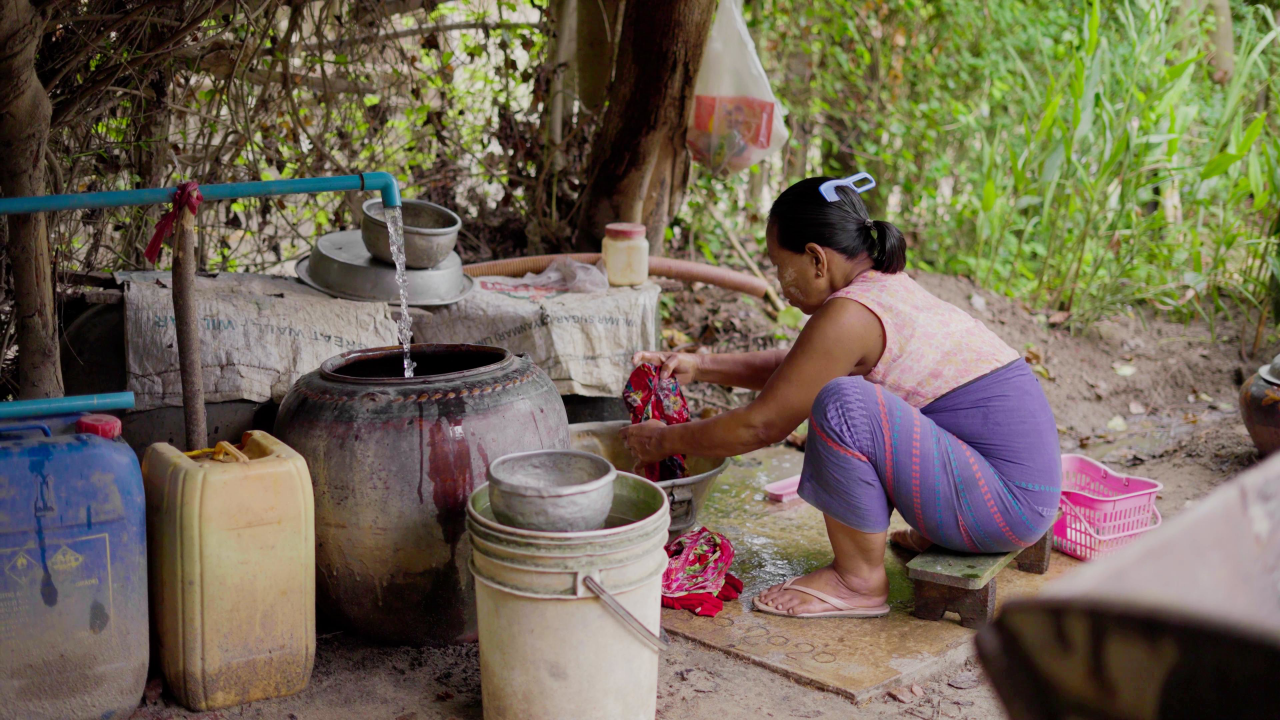
04:43 ~ 04:52The community member is washing the clothes. Plenty of water is coming out of the faucet.
04:53 ~ 05:05 A community member is collecting water using a water bucket. Plenty of water is coming out of the faucet. After collecting water, he closes the faucet and carries the water bucket away.
05:06~05:14 Students are drinking water from the pot.
05:15 ~ 05:19 Plenty of water is coming out of the faucet.
05:19 ~ 05:26 A community member is drinking water from the pot.
05:27 ~ 05:57 U Hla Htay - ICRC Staff Member of the Mandalay ICRC Office, speaks to the camera (in Burmese): “Due to the earthquake that struck on 28 March 2025, the entire water system of the village was destroyed. Since the whole water system was destroyed, the ICRC, together with the Department of Rural Development, implemented a water project in this village. This included drilling a 500-foot-deep well, laying new pipelines, and repairing the water tower. Then, the water was pumped up to the tank. Now our project is complete, and every household in the village has direct access to water. Both the water quantity and quality are excellent. It produces about 10,000 liters per hour, around 2,5000 gallons.”