Age Verification

This website contains content that may not be suitable for all audiences. You must be at least 18 years old to access this site.

Multimedia Newsroom
16-10-2026

Nigeria: ICRC-supported health facilities see 18 per cent rise in malnutrition cases

Young children, pregnant women and breastfeeding mothers are the hardest hit.

The increase is sharpest in Mubi, in Adamawa State, where admissions rose by nearly a quarter, from about 4,600 cases in the first nine months of 2025 to around 5,700 over the same period in 2026.

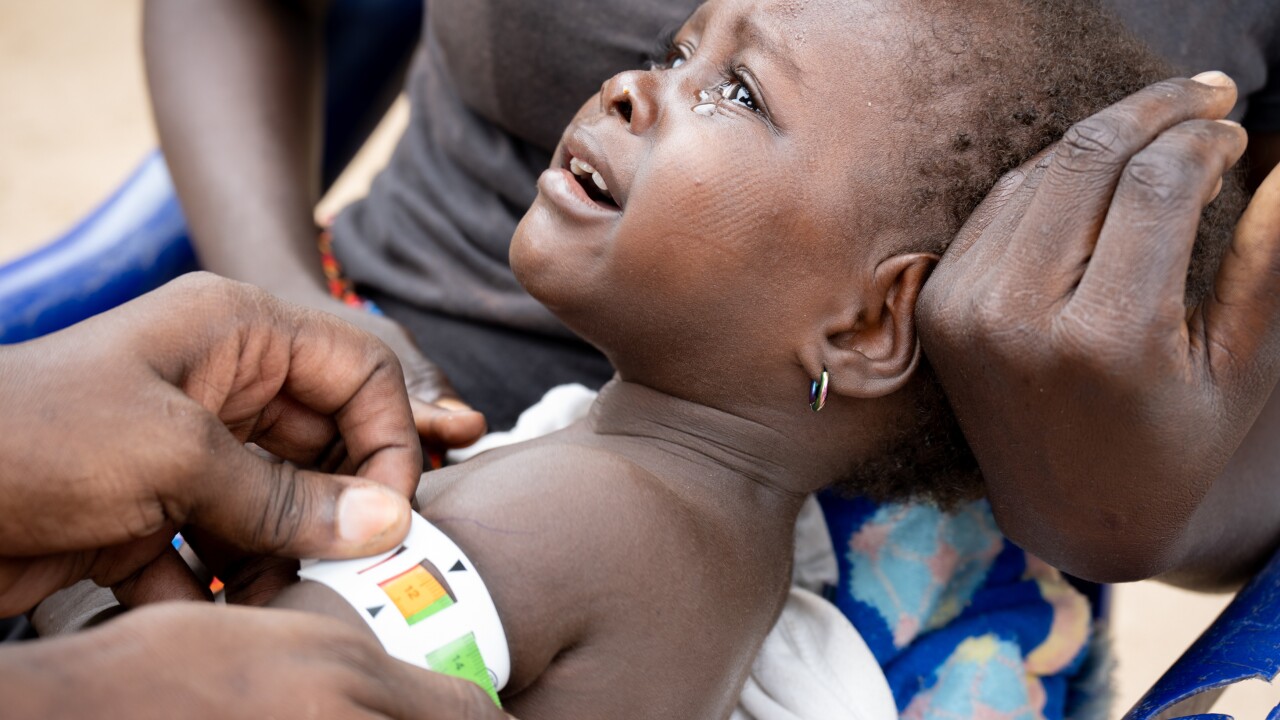
At the Mubi Stabilization Centre mothers wait in line with their young children for a check of their nutritional status. Among them is Zulaihatu Mohammed, holding six-month-old Huseina, one of her twins.

“When I gave birth to them, this one was tiny,” says Zulaihatu. “I came today for the routine collection of children’s food. She is not feeling well. Since I gave birth to her, she has been unwell.”

Zulaihatu’s experience reflects the challenges facing families across north-eastern Nigeria, where armed conflict, climate shocks and economic pressures have disrupted livelihoods and made it harder to put meals on the table.

||
Zulaiha Mohammed, a mother of twins from Muda, with an ICRC staff, seeks medical attention for for her six-month-old twin daughter, Huseina Ahmadu, who is suffering from malnutrition, at Mubi Stabilization Center in Mubi, Northeast Nigeria.
Felix Kariithi, Eric Chege / ICRC

Zulaiha Mohammed, a mother of twins from Muda, with an ICRC staff, seeks medical attention for for her six-month-old twin daughter, Huseina Ahmadu, who is suffering from malnutrition, at Mubi Stabilization Center in Mubi, Northeast Nigeria.

||

For farmers like Saminu Samiyu Ijaduwa, explosive devices have made fields further from home dangerous to cultivate. For that reason, he has no choice but to cultivate a small plot, close to his house.

“Due to the conflict, going one kilometre out of town to farm could be highly risky. You might not return!” says Saminu.

When families cannot safely reach their fields and markets are disrupted, access to food becomes even more difficult. The consequences can be particularly serious for young children and pregnant and breastfeeding women.

||
Saminu Samiyu's family farms on their land in Duhu, Nigeria. They have been growing maize for seven years to feed their family after they were restricted from accessing farmlands outside the town due to the ongoing conflict in Northeast Nigeria.
Felix Kariithi, Eric Chege / ICRC

Saminu Samiyu's family farms on their land in Duhu, Nigeria. They have been growing maize for seven years to feed their family after they were restricted from accessing farmlands outside the town due to the ongoing conflict in Northeast Nigeria.

||

To combat malnutrition in Nigeria, the ICRC, together with the Nigerian Red Cross, supports 15 primary health-care centres and four hospitals, helps more than 200 communities to treat malnutrition and runs programmes to strengthen their food security. This includes providing farmers with seeds suited to drought and flooding, promoting crop diversity and supporting mothers to prepare nutritious food at home.

For example, a blend of sorghum, millet, soybeans, groundnuts and moringa, known as ‘Tom Brown', has helped more than 13,000 young children recover from moderate acute malnutrition. Mothers also learn to prepare it themselves, in order to continue to provide nutritious food for their children.

||
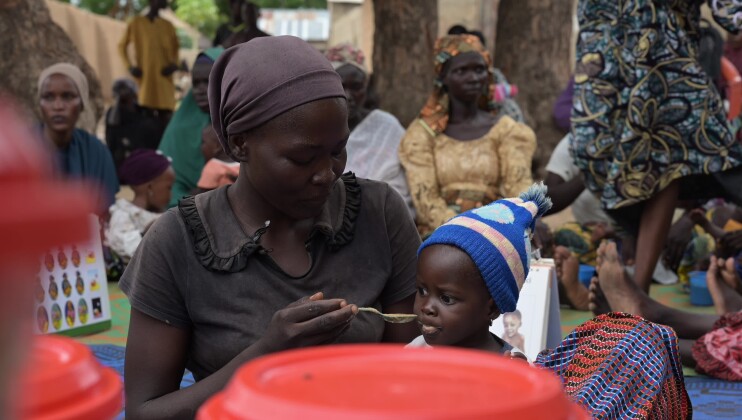
A mother feeds her child Tom Brown, a nutritional supplement provided by the ICRC to children under five years to help improve their health and nutritional status.
Felix Kariithi, Eric Chege / ICRC

A mother feeds her child Tom Brown, a nutritional supplement provided by the ICRC to children under five years to help improve their health and nutritional status.

||

In Nigeria, Africa’s third-largest economy, the toll of 15 years of conflict has had a measurable impact on overall hunger levels: in 2026, more than 34 million people are expected to lack enough food to feed their families, the highest figure in six years, according to analysis from the United Nations [1]. This same report places Nigeria among the world’s hunger hotspots of highest concern, alongside Sudan, Yemen, Somalia and Gaza.


[1] FAO and WFP, Hunger Hotspots: FAO–WFP early warnings on acute food insecurity – June to November 2026 outlook, Rome, 2026

For more information, please contact:

Aliyu Dawobe, ICRC Abuja, tel: +234 803 953, adawobe@icrc.org 

Mateo Jaramillo, ICRC Nairobi, tel: +254 716 897 265, mjaramillo@icrc.org

More Related News
Multimedia Newsroom
Images & footage available to download at no charge.
They may not be sold or transferred to a third party or used for commercial purpose.
Caution: our footage can be distressing.

Privacy Policy | Copyright
ICRC ©2026 - All right reserved